Pep Talk Issue 2
Welcome to Issue 2 of Pep Talk! Thank you all again for subscribing. Please feel free to share the subscription link widely!
Plagiarism Machine
We were required to take elective courses in high school. For three of my four years, I took art. I wasn’t particularly talented, but I loved spending hours in the art room working on my mediocre projects. I liked the progression of a fresh sheet of paper, a literal blank canvas, as it transformed into something new. New art supplies have always been on my list of favorite things, so breaking open a fresh pack of colored pencils brought me great joy.
Since then, I haven’t really gone back to art as a hobby, but I’ve tried other things to varying degrees of success – writing poetry, running, fencing, swimming, learning languages, gardening, and cooking.
I must always remind myself that it’s okay to not be great at something when I first try it, or even ever. The point of a hobby is to dabble in something new to see if you like it. The more you practice your hobby, the more likely your skills will improve. This doesn’t mean you’ll suddenly become an expert, and that’s okay!
Adults seem to need this reminder more than children. I can’t remember exactly when I became more self-conscious about not being ‘good’ at something new. Perhaps it was after college when my focus shifted from learning to working. My free time was far more limited and, thus, was something I guarded with more care. I didn’t want to risk ‘wasting’ my time on something I wasn’t going to excel at.
Luckily, I’ve been able to somewhat reconnect with that willingness to try new things. My attempts at learning and speaking Dutch over the last sixteen months are proof of that. However, I worry that the ability to suck at something new and work to get better at it is a skill that is becoming extinct.
Earlier this year, the running group that my husband and I belonged to when we lived in Milwaukee (and still technically belong to even though we live in the Netherlands) held a contest to design the t-shirt for the winter points contest. Without getting into too much detail, the winter points contest is an annual challenge that invites all runners in the group to earn points for each time they run outside in the winter. All runners who earn a qualifying number of points are then eligible to purchase the special winter point shirt for that year. It’s a fun challenge meant to encourage people to stay active during the long, freezing winter months. Group members are also invited to submit designs for the shirt. These designs are voted on by qualifying runners to determine the look of that year’s winter points shirt.
This year, four design options remained after the first round of voting. It quickly became clear that at least one of the final designs had been created using Generative AI – the little Gemini watermark was still visible in the corner.
I’m sure you’re aware that Generative AI is being shoved into every corner of our lives. You can’t open Microsoft Office without being begged to use Copilot. Google searches are absolutely horrible, prioritizing an AI generated summary to answer your query instead of a list of actual resources. In schools, students in are using Chat GPT to write their essays and do their assignments, completely obliterating the purpose of education.
And, worst of all, Generative AI is nothing more than a plagiarism machine. Generative AI models are “trained” by being fed existing material they can use to recognize patterns in speech, writing, art, and more. Generative AI then takes those patterns and spits out whatever garbage it cobbles together from its “training”. In short, it steals the work real people have put time and effort into creating and uses it, typically without permission, to produce work real humans could have created.
The work Generative AI creates is almost always easily recognizable. The colors in AI art are oversaturated. People have extra fingers. Objects appear in places they don’t belong or don’t make sense. AI writing makes your eyes hurt. It’s boring, shallow, and sounds stilted and unnatural. There is no substance or feeling within the words.
People noticed the AI running shirt design. Some people voted for it, even though it was not a good design by any measure. Several others commented that the design was AI generated. This led to a conversation in the Facebook comments (I know) where a clear line emerged between those who did not appreciate an AI generated design and those who argued AI is also art.
First, Generative AI is decidedly not art. It doesn’t take artistic talent to type in a few prompts. Real artists and designers take the time to learn and perfect their craft. They brainstorm, sketch, create, and refine their creations. The process is an important part of the art. The final piece reflects all the energy the creator put into the art.
I know this might be a difficult concept to understand for someone who hasn’t worked in a creative field or doesn’t have a passion for a creative hobby. And that’s okay because everything doesn’t have to be for everyone!
Somewhere along the way, society seems to have decided that there isn’t a need for skilled specialists, particularly in the arts. We can see this in the way that AI is forced into our lives when we don’t need or want it. I find it interesting that the people who defend and utilize Generative AI the most are those who work in tech while those who staunchly oppose it are people who appreciate the work that goes into art – artists, writers, musicians, designers, and actors.
This disrespect toward careers in the arts and artistic talent isn’t new. But the idea that everything must be for everyone is a more recent phenomenon. I can’t help but feel like some of this goes back to the pandemic when many people decided they didn’t need to listen to the experts because it was inconvenient and they didn’t like that they were being asked to do things that interfered with their lives. Once you make the leap from doctors are experts to doctors don’t know what they’re talking about, it’s simple to assume that you don’t need experts in any field.
The case of the winter points shirt illustrates the (incorrect) idea that it doesn’t take education and practice to learn a skill when you can just enter a few prompts. It was meant to be a fun contest that anyone in the running group could participate in. There are many artists and designers in the group who produce awesome designs for the contest every year. There’s no need to run to a computer and fire up the plagiarism machine to create a design so you can check the participation box. I don’t understand the need to create a design for a voluntary, fun contest just because you feel like you need to, not because you get any joy out of the creative process. Everything isn’t for everyone and that’s okay.
Furthermore, if someone really felt a strong desire to create a shirt design, a piece of art, a story, or anything else creative, it’s possible to do the work to learn how to do so. It’s perfectly fine to suck at something and be willing to learn how to get better. Whatever outcome your best work produces is better than stealing someone else’s work.
Even educational institutions are falling prey to the AI trap. One of the main purposes of education is to push students to strengthen their critical reading, thinking, and writing skills. Institutions that allow students to rely on Generative AI tools are neglecting this duty. A recent paper from the Wharton School analyzed the increase of individuals’ reliance on AI for reasoning tasks. Students who are entering or who are in college now might never develop reasoning skills because they use AI during critical cognitive development years.
Often the arguments for generative AI boil down to one thing – it’s faster. Sure, AI could write this newsletter for me in minutes. It can write your emails and website content, but why do those things need to be done faster? I frequently see requests from companies looking for freelance writers to rewrite or refine AI generated content. These posts make me so angry – these companies have used AI to write content that they now realize is garbage. Then they want a writer to come in and fix it. First, just hire a writer in the first place (you can probably guess the type of freelance writing work I turn down 100% of the time).
Second, writing doesn’t work that way. It’s a process. When I write something, I start with an idea. I jot down some thoughts about that idea, then I leave it alone for a few days (sometimes weeks or months). It’s in the back of my mind, though, and my brain is working on it. Then, I make an outline of what I think I want to say. I research. I write a draft. I revise that draft, sometimes many times to get it to a point where I’m happy with it. That’s what being a writer is – the entire process of generating an idea, researching, outlining, writing, and revising.
For this newsletter, I have notebooks and Word documents filled with ideas, outlines, lists, sources, and starts of pieces that I want to write about here. While this is a weekly production and, therefore, is not as polished as a piece I’ve worked on for months, it still takes a lot of time and work to create. I put that effort in because I love writing. If you aren’t willing to do all these steps, then you aren’t a writer. And that’s fine! Everyone doesn’t have to be a writer. There are plenty of us who love to do this work, and we don’t destroy the planet at the rate of Generative AI.
Finally, and every bit as critical as the importance of not outsourcing your brain by relying on a plagiarism machine to think for you is the negative environmental impact of the explosion of AI technology. The massive data centers needed to run AI tools suck up water at an alarming rate. Every time someone types in a 100-word AI prompt, it’s equivalent to wasting an entire bottle of water. Paired with the already increasing global temperatures, humanity is staring down a climate and water crisis that we won’t recover from.
To take a page from John Oliver’s script, so what can we do? First, don’t use Generative AI for simple, basic tasks you can do yourself. Turn off the AI search filter in your browser (I use Duck Duck Go). Avoid the temptation to use tools that might seem like they help, but in the long run will only hurt you and others. Ask yourself if it’s worth it to complete a task a little faster now? Will you still feel that way in a few years when water shortages and climate change get worse because data centers are using so much water and energy?
You can also advocate against data centers in your community. Cities around the world are prohibiting or limiting data center development. Protests are working in some areas with many projects delayed or cancelled entirely. Continue to put pressure on politicians, especially in places where elections are approaching, such as the midterms in the United States this November.
Remember, if you don’t have the skill to do something, learn how or find someone who does have the skill. There’s no shame in being bad at something and working hard to improve. There’s plenty of shame in outsourcing your brain because you don’t want to learn.
Other Stuff
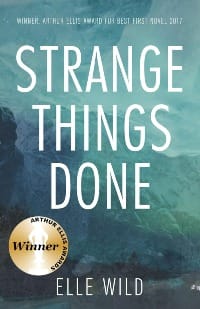
What I’m Reading: “Strange Things Done” by Elle Wild. I needed a shorter book to read while I waited for two others in my Libby queue that were almost ready. I picked up this 2017 award winner, and it was so good. The book is set in the Yukon and, as a summer and heat hater, the arctic setting transported me (mentally) to proper cold conditions. The story was engaging and kept me guessing until the very end. Highly recommend!
What I’m Listening to: Noah Kahn, of course. I love watching the videos popping up from all his U.S. shows. I’m impatiently waiting for the Amsterdam show we have tickets for in December. I’m also listening to Florence and the Machine in preparation for her concert in Edinburgh next month.
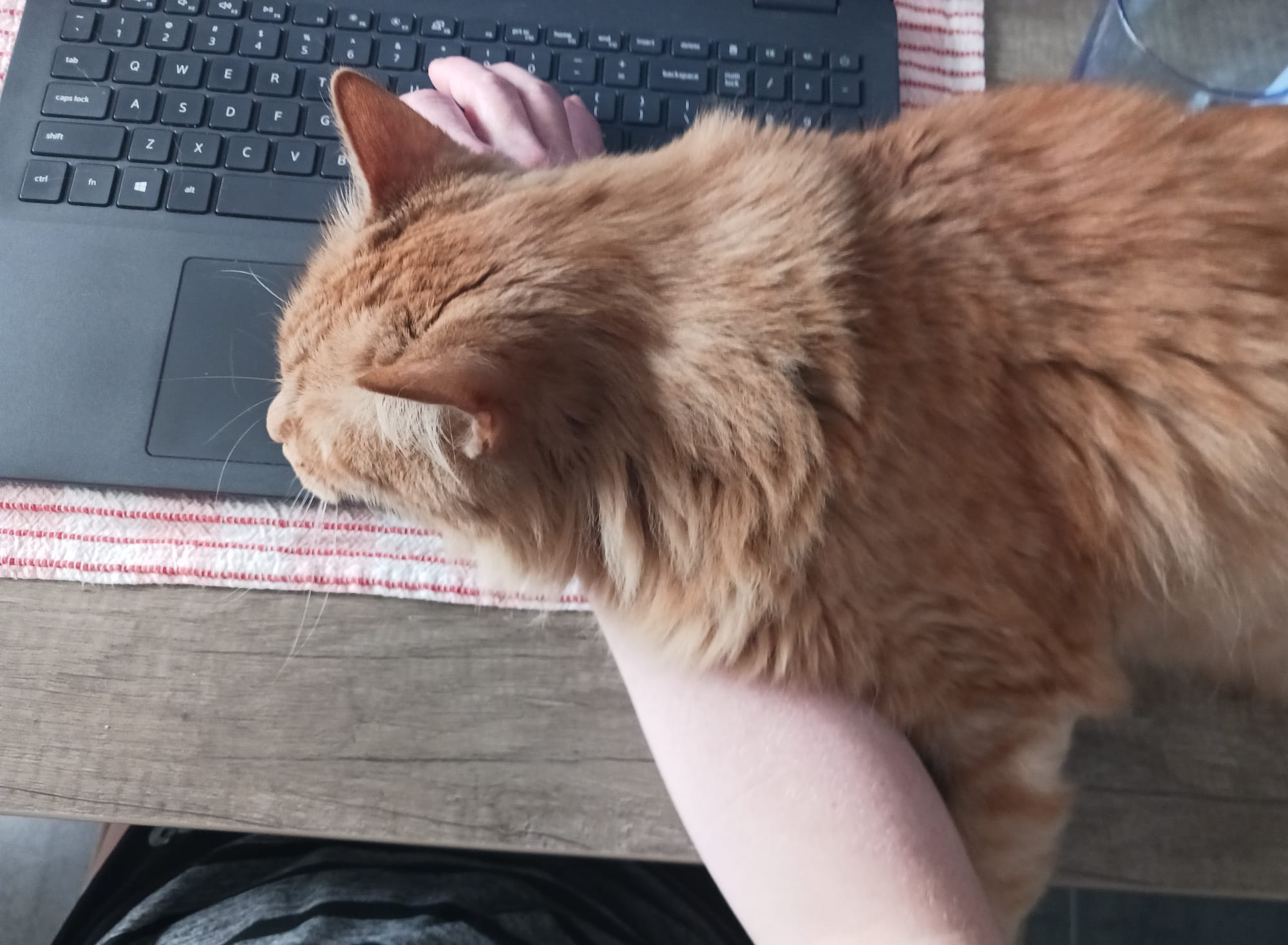
How’s the Typing Situation This Week: Always the same😊
Until Next Week…
Thank you for subscribing and reading. Try new things, even if you’re bad at them and don’t use the plagiarism machine!
Please feel free to share this link with your friends, family, coworkers, and anyone else who might enjoy it! Subscribe to Pep Talk
Member discussion